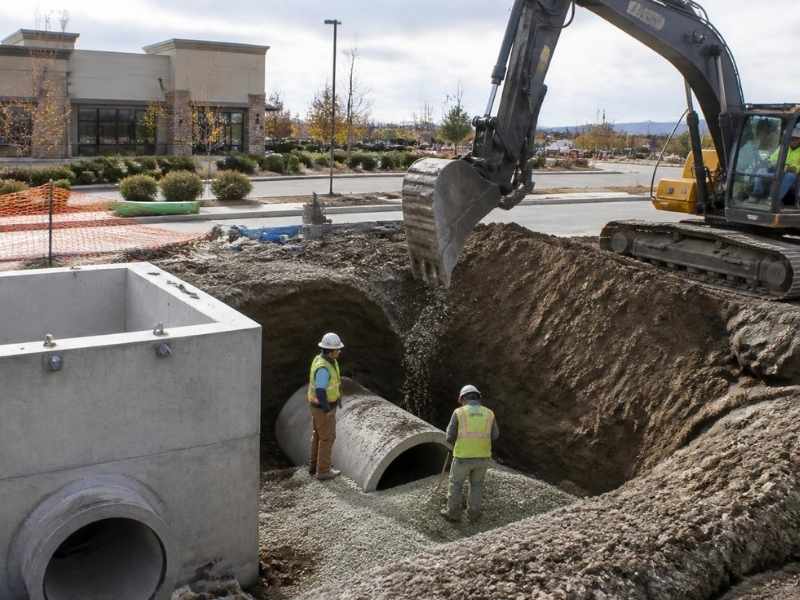
A precast utility vault can weigh many tons, and the crane that sets it is often booked by the hour. If the hole is in the wrong spot or a few inches too deep, the crane waits, the crew waits, and the bill keeps running. A construction staking survey puts the vault’s location and height on the ground before anyone digs. Get the layout right first, and the rest of the install follows a clear plan.
Utility vaults hold valves, meters, electrical gear, or communication lines. They tie into pipes and conduit that must line up at set heights and angles. This guide walks contractors and project teams through what the survey covers and what to check.
Construction Staking Survey Requirements for Underground Vault Placement
A construction staking survey takes points from the approved plans and marks them in the field with stakes, nails, or paint. For a vault, that usually means the corners or center point, the direction the vault faces, and the elevations it must match. The surveyor works from the latest approved drawings, not an older set from the bid stage.
Before staking day, gather the details the survey crew will need:
- The approved site or utility plan with vault coordinates or dimensions
- The rim elevation, which is the height of the top lid at finish grade
- Invert elevations, which are the bottom inside heights of pipes or conduit entering the vault
- The vault size and wall thickness from the shop drawing
Utility owners often have their own standards for vault placement and access. These can vary by utility, jurisdiction, and project type. Confirm them with the engineer before staking so the layout matches what the inspector will expect.
Horizontal and Vertical Control for Precise Vault Positioning
Control points are the fixed reference marks a surveyor uses to measure everything else on the site. Horizontal control sets the location in plan view. Vertical control, often called a benchmark, sets the height. Both must match the system used on the project plans, or the vault can land in the right spot at the wrong elevation.
A good crew checks into at least two control points before staking. If the numbers don’t agree, they stop and sort it out before marking anything. That small step catches disturbed points, typos in coordinates, and plan errors.
Excavation will tear out any stake placed right on the vault footprint. That’s why surveyors set offset stakes, which sit a measured distance away from the actual corner or center. The offset distance and direction are written on the stake. Your crew measures back from those stakes to find the true location after digging starts.
Clearance Considerations Around Existing Underground Utility Lines
New vaults often go in near water mains, gas lines, power, fiber, and storm pipes. Contact 811 before any digging, as required by your state’s one-call rules, so utility owners can mark their lines. Those paint marks show the approximate location only. Depth is usually not marked, and the true line may sit a short distance off the paint.
The survey crew can pick up locate marks, manholes, valve boxes, and other visible features and add them to the layout map. If the space looks tight, many teams use potholing to confirm the exact location and depth. Potholing means digging a small test hole by hand or with vacuum equipment to expose the line safely.
Separation rules between a vault and nearby utilities vary by utility owner and local code. Some lines need extra room for future repairs. Ask the engineer to confirm clearance needs before final layout, since moving a vault after excavation costs far more than shifting a stake.
Construction Staking Survey Checks for Vault Depth and Alignment
Depth gets as much attention as location. Grade stakes show how far to dig, often written as a “cut” from a reference mark on the stake. The target is usually the bottom of the base stone, not the bottom of the vault itself.
Work out the stack from the top down. Start with the rim elevation, subtract the vault height, then subtract the thickness of any base stone or concrete pad. That gives the subgrade elevation the excavator needs to reach. Run this math with your surveyor before staking so everyone uses the same numbers.
Alignment matters too. Pipes and conduit enter through knockouts or openings at set spots in the vault walls. If the vault is rotated even a few degrees, those openings may not line up with the incoming lines. Ask the surveyor to stake at least two points that show the vault’s direction instead of a single center point.
Final Layout Verification Before Utility Vault Excavation
Walk the layout with the surveyor and foreman before the first bucket goes in. Measure from the offset stakes to confirm the corners and check that the vault fits inside any easement or right-of-way. Compare the staked rim height to the planned finish grade around it. Fix any doubts while the ground is still flat.
Stakes get knocked over on busy sites. If one looks moved, call the survey crew back instead of guessing. After the vault is in place, an as-built shot of the rim and inverts gives the owner a record that matches the field.
Schedule the staking early, especially if a crane date, inspection, or utility shutdown depends on it. Survey crews often need a few days’ notice. Plan changes after staking may require a new layout, so let the surveyor know as soon as the design shifts.
Frequently Asked Questions
Who usually orders the construction staking survey?
The general contractor or site contractor often orders it, since they control the schedule. On some jobs, the owner or utility company hires the surveyor directly. The contract documents usually spell out who is responsible. Check this early so nobody assumes the other party has it covered.
How far ahead should we schedule vault staking?
Many survey firms need a few days to a week of notice, depending on their workload. Rush requests may be possible but are not always available. Send the approved plans and shop drawings with the request so the crew can prepare. Book the staking before you lock in the crane and delivery dates.
Can machine control replace stakes for a utility vault?
GPS machine control can guide an excavator to the right depth and location. It still depends on a surveyor building an accurate model and checking site control. Many crews use both machine control and a few physical stakes as a backup check. Ask your surveyor which approach fits the size and risk of your vault install.